
Home » Posts tagged 'elfidd.com'
Tag Archives: elfidd.com
Growing up
I’m a few years over the age of eighty and I still have some reflective memory back to the eary 50’s. But please, dont ask me who that guy was I spoke with yesterday. So, here goes the old memory.
My First Boss
It was early April in the year 1955. Less than a month ago I turned twelve and I was just starting my first real job. I’d had other jobs of course, Billy White and I sold snow cones one summer. I spread coal ashes on some sI’m a few years over the age of eighty and I still have some reflective memory back to the eary 50’s. But please, dont ask me who that guy was I soke with yesterday. So, here goes the old memory.
idewalks in our neighborhood when things got icy, and shoveled sidewalks after snowstorms. I even went to Frank’s Market for Mrs. Holler on occasions, she was always running out of milk or butter or something when she was baking. She lived two houses up the street, so I was convenient. That was always worth a dime or fifteen cents. But these were not real jobs, no boss, no regular schedule, and most of all no regular money. This job was for real, I was on my first day as a paperboy for the Philadelphia Bulletin. I would now have to show up on time, have a boss and get some real money.
On the day I started, It was a Monday, I hurried home from school, dropped off my books and stuff, said hi to my grandmother, she watched me, my mother was off at RCA working. My parents had been divorced for about ten years and my dad and his family lived in Connecticut with his new family. I’ll gather some stories from there later, there’s lots of them.
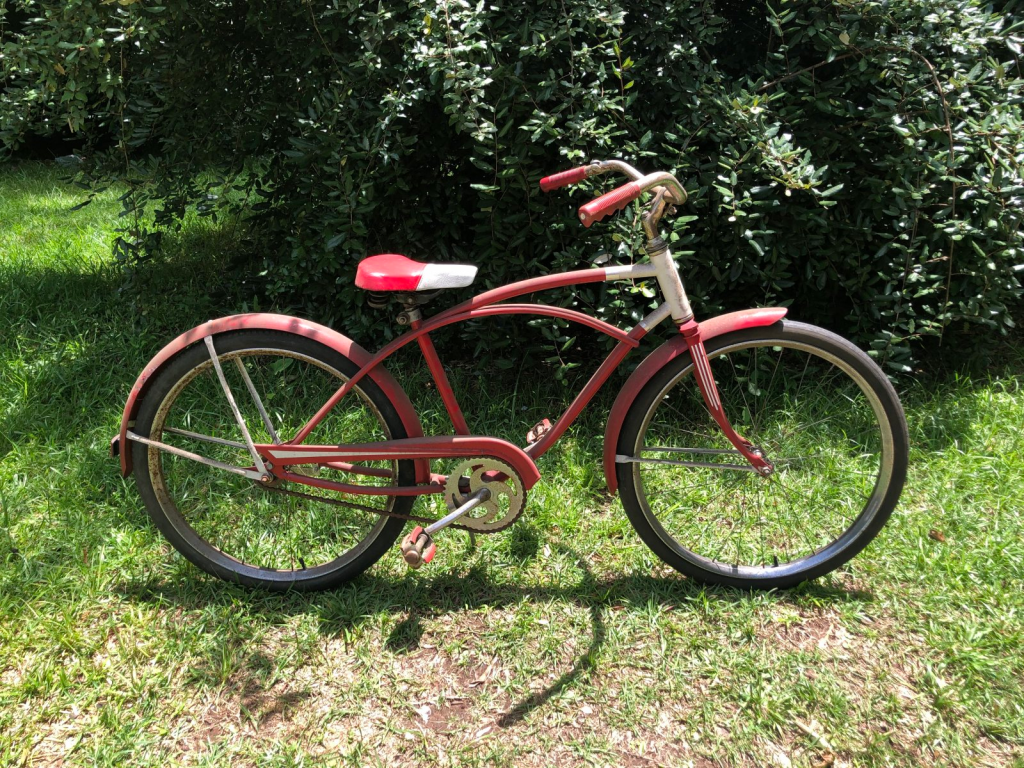
My rendezvous point to pick up the papers and to meet the Branch Manager was exactly a half mile away, a short peddle for this speedy rider back in those days. With my Vertigo and such it would be a disaster for this old man today. The newspaper company rented a garage behind the Audubon Bakery on Merchant St. All the paperboys met there to get their papers each day. We had a teenager about sixteen as our Branch Manager. His name was Allen, Big Al was what everyone called him.
I remember that first meeting quite well. As I pulled up near the garage, I laid my bike down, along with ten or more others and walked into the garage. My buddy Stan was there already, he got me the application to fill out and have my mother sign. My mother thought I was too young at first, but I convinced her, with help from Grannie of course that I could handle the job. I mean, how hard is to peddle a bike and fling a paper. “Come here kid” shouted big Al” and I ran over to a large table he was standing behind; the other kids were just hanging around, I didn’t notice any papers anywhere.
Big Al had a couple of printed papers from the Bulletin about delivering the papers and collecting the money and paying your bill each week. Most of the money collecting was done on Saturday mornings. We delivered all the supplements for the Sunday paper on Saturdays. By doing this it made the thick Sunday paper a little lighter. These were the comics, advertisements, Parade magazine and such. I also had another official looking document to take home and have my mother sign. I was given my route assignment list, it had the customer’s names, address and, what paper they got on what day. Some only got the Sunday edition. I also learned I would have forty seven customers, a few more on Sundays. Big Al gave me a Canvas Bag, an official Philadelphia Bulletin newspaper bag. Hey, I was now “Hot Stuff.”
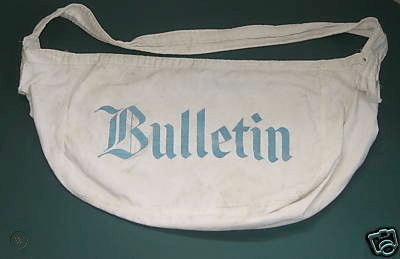
Al explained how to collect the money, we would turn in the money on Mondays. The Sunday edition cost the customer .25 cents, the weekly 5 cents a day or .30 cents for the week. I would quickly learn that some customers weren’t very reliable at bills, others would always pay their bill and give you a tip. I had one house where the man would always say, “I only got a twenty kid, you got change? I finally got smart and said I would take it a half block away to the store and get change for him. After that he had the right money, never a tip though. Later I would learn, if I hung around until Christmas, I’d see big money. Once finished with me, big Al dismissed me and told me hang with the rest of the crew until the papers came.
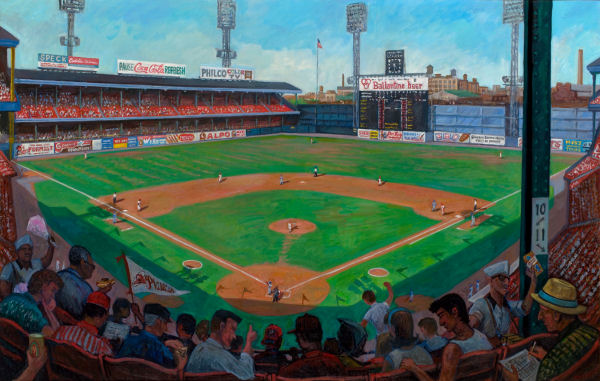
Big AL would become a good friend to most of us over time. He even escorted us to a few Philadelphia Phillies games back in the day. The Bulletin provided the tickets. They were the worst seats in the stadium, but who cares, we were kids. On those trips we took a bus and two subway rides and a walk up Lehigh Avenue to get to Connie Mack Stadium. Del Ennis, #14, was my Philly favorite back in those days. After twenty years in Connecticut I never grew to love the Red Sox. I always had a second love though, yep, it was the Yankees. I still root for them today.
Back to my first Boss and first real job. I remember practicing how to fold the paper and tuck in into it’s self so you could throw it from your bike. If it was a real thick paper we would use a rubber band to keep it together and throw-able. Most houses back then had porches. We would ride the sidewalk and fling the paper to the porch. A miss would require a stop and fetch and get it onto the porch. Sometimes a bad fold would leave the paper to the whims of the wind, (ouch!) That was like rounding up a flock of chickens. These little things made for a little more time to finish the route, back in the day.
There were a few hazards in this job I need to make you aware of. People walking on the sidewalks caused you to divert to the street or someone’s lawn. A raised sidewalk lifted up by a tree route not diverted, could bend a tire rim and give you a flat tire. If you had to walk the bike and carry the papers to complete your route, it was a struggle. This event happened several times over the three years I had my route. Keeping an eye out for backing up cars was a must. I can’t forget the cold, the wind, ice and, snow. On a few foul weather occasions my mother would be my chauffeur, what a treat that was.
So, the streets I delivered on were the intersecting streets to the west of Merchant St. Another route covered those to the east. My route ended a block from my house, it was quite a treat knowing when I delivered that last paper I was almost home. A few of those street names were, Audubon, Ave., Wyoming, Oswego, Central, Cedercroft and, Payson Avenues. Thanks for the help remembering goes to Google.
“Trucks here” someone shouted as a Box truck backed up to the garage. One of the older kids climbed into the back, checked the Route paperwork the driver gave him and began tossing bundles on to the garage floor. If I remember right, there were twenty-five papers to the bundle. I was told to grab two bundles, open one and deposit three in a large box on the wall. Makes sense to me, forty seven daily customers, leave three for someone else. Those papers in the box would help make up other routes. A kid with 53 on his route would take my 3 to complete his count.
Some of the guys stayed in, or right outside the garage and started folding their papers. Stan said, “follow me.” Stan and a few other guys went up Atlantic Ave. to the foot bridge over the railroad tracks. We would use the covered area under to two sets of stairs that led to the bridge over the tracks. I was to learn during lousy weather this was a great place to stay dry while folding.
On Sundays the paper was delivered early in the morning. The routine on Sundays was to go to the Audubon Diner, get a doughnut and cup of coffee to go, and return to the railroad overpass for the fold. There was a lot of talk while folding. Up coming, baseball was starting, did you hear about the fire last night, or, how about that accident on the White Horse Pike.
Audubon was divided in two by the White Horse Pike. There were two grade schools, #2 School on our side of the pike, #3 school on the other side. There was quite a rivalry in town between the two. All us paperboys at the Merchant St garage were #2’s. Guys from #3 school got their papers on their side of the Pike. That White Horse Pike could be dangerous to cross, especially if you didn’t cross at a traffic light.
For the first few days of delivering the paper I would have to use my route address ‘s card that I made up and pinned to my bag. My first Saturday, which started about nine am, was for collecting. I learned quickly that some would pay and others wouldn’t. I had a book I kept for the payment info that I made up myself.
Some customers would pay on Fridays, some Monday and some almost never. I learned to trick a few of these folks from time to time and find them on off days. On a few occasions I had to borrow a buck or two from my mother to pay my bill. I had a book I kept for the payment info that I made up myself. I learned quickly about keeping records, “If it’s not written down it never happened.” I still keep books today, I journal something daily. I’ve been doing that for years, I even write a Blog on the internet from time to time.
If you went on vacation you had to find your own replacement, and Stan and I covered for each other. When one of us was gone the other would have a double route. Stans route began where mine ended so it was really convenient. Collections were kind of a long day, but we were young, and we survived. We were delivering right around 100 papers when we did both routes.
Fall would turn into winter and the days got shorter. Cold rain, wind, ice, and snow would add adventure to our flinging papers. When you think about it, we were kind of like Postmen. On most days our papers were delivered by 3:00. When there were delays it was often dark when we started. I rigged up a flashlight with Electrical tape to my bag and had a reflector stapled to the back of a soft cap I wore. I’m still here, so I guess they worked.
I had to give up my route after three years when we moved to Wildwood, NJ. I would have several jobs there, one renting Beach Umbrellas and one as a Busboy in a restaurant. I’ve always had a job, sometimes two, and a lot of Boss’. I remember some and there are others that I don’t. I will always remember Big Al, my first boss. For the life of me I can’t remember his last name.
Thanks for the memories Big Al.
More about the mailbox
The mail box is growing. I’m kind of, like is often said. embellishing. This is what the Rooster sent out to all my participants this morning.

Yesterday, 16 December 2024, a $13.00 Pot. Alana the winner by 11 minutes, The time was 1517 – Alana 1528. Marissa 1530, by two minutes Alana is the winner. Did you know the Ancient Egyptians invented the (12) month calendar. Here are some, did you know facts on Egypt if at all interested. Check out the Contiki web site and look up facts about Egypt and many other places around our globe. Have you guessed yet this game is not all about the money?
Today’s cash payout will be for $20.00 and it will be delivered by Bakari Shirawi of Qena, Egypt. Bakari is helping out the fat little guy today, I hope he doesn’t use his Camel. Here is a little info on Bakari’s home town in Egypt.

Qena is a governorate in Upper Egypt bordered with Aswan Governorate from the south, Red Sea from the east, the New Valley from the west and Sohag Governorate from the north. The capital of the governorate is Qena City that locates about 600km away from Cairo. Qena Governorate covers about 10798km and encloses a large number of administrative centers, cities and villages. On the lands of the governorate there is a wide range of archeological sites enclosing more than 7000 antiques in cities like Naqada, Esna, El kab, and Armant in addition to Luxor that is regarded as a separate governorate currently. To facilitate the process of reaching the governorate for both locals and foreigners, Qena is linked with the other neighboring governorates with railroads and airport roads as well. It is served also by Luxor International Airport that lies few meters away from Qena City. The major economic resources for the governorate are tourism and other industries such as pottery pots, perfume, soap and oil industries. Some small villages in Qena such as Hegaza village achieved a resonating fame in manufacturing wooden items with magnificent paintings and decorations that is highly admired by Egyptians and foreigners alike. Manual carpet craft is one of the crafts that is widely practiced by inhabitants of Qena who use the wool of their cattle for producing beautiful carpets and wall hangings of attractive natural scenes over it and selling it at good prices. Qena Governorate encloses a wide range of agricultural lands and is famous for planting some crops such as sugar cane that is used for producing the black honey.1
Well now you know who won, got a little educated on Egypt and the town of Qena home of one of Santa’s helpers. Our next elf for a day will be coming from Winnipeg, Canada, home of Poutine.

Cloudy and 53f here in Trinity, it’s 14f in Winnipeg, coming our way. Have a great day all. If your wondering why I refer to Winnipeg, Canada I’ve done that for many years, I also check Upper Winds, it kind of gives me a feel for what’s coming our way.
Grannie and Pop send hugs to you all.

Wake-up Choices
So, what gets you going first thing in the morning? Of late the first thing is our young next-door neighbor. As it is with most young men who own a P/U truck these days, seems the exhaust has to make a deep throaty growling sound. Kind of like when my great granddaughter is visiting and I go Grrrr’rr, I’m gonna get you, and she scurries away and the chase is on. Not sure what these guys are chasing, chics I hope.

Now the growl of a big Ford, Chevy, or Ram is really not what I’m referring to here. I was more or less going to speak to liquid intake. For some, it’s tomato or orange juice juice. For the HIP I’ve seen so many concoctions, that it blows my mind. One in particular I would most likely never do is a GREEN something. For some reason, I just can’t get into drinking green. I include for your reading ingestion the following https://insanelygoodrecipes.com/breakfast-drinks/

Now for me and mine of late, we’ve been trying cinnamon-infused pods from Starbucks and Dunkin. I’m the Barista here and it just works for me. It is so simple for the two of us. We’ve farmed off gatherings to our daughters Kathryn & Sarah who live close by. So Matthew, our son in Connecticut escapes hosting the Mid-Atlantic gatherings. But then again, he married into a giant family on his wife’s side and the family has some big gatherings to accommodate up north.
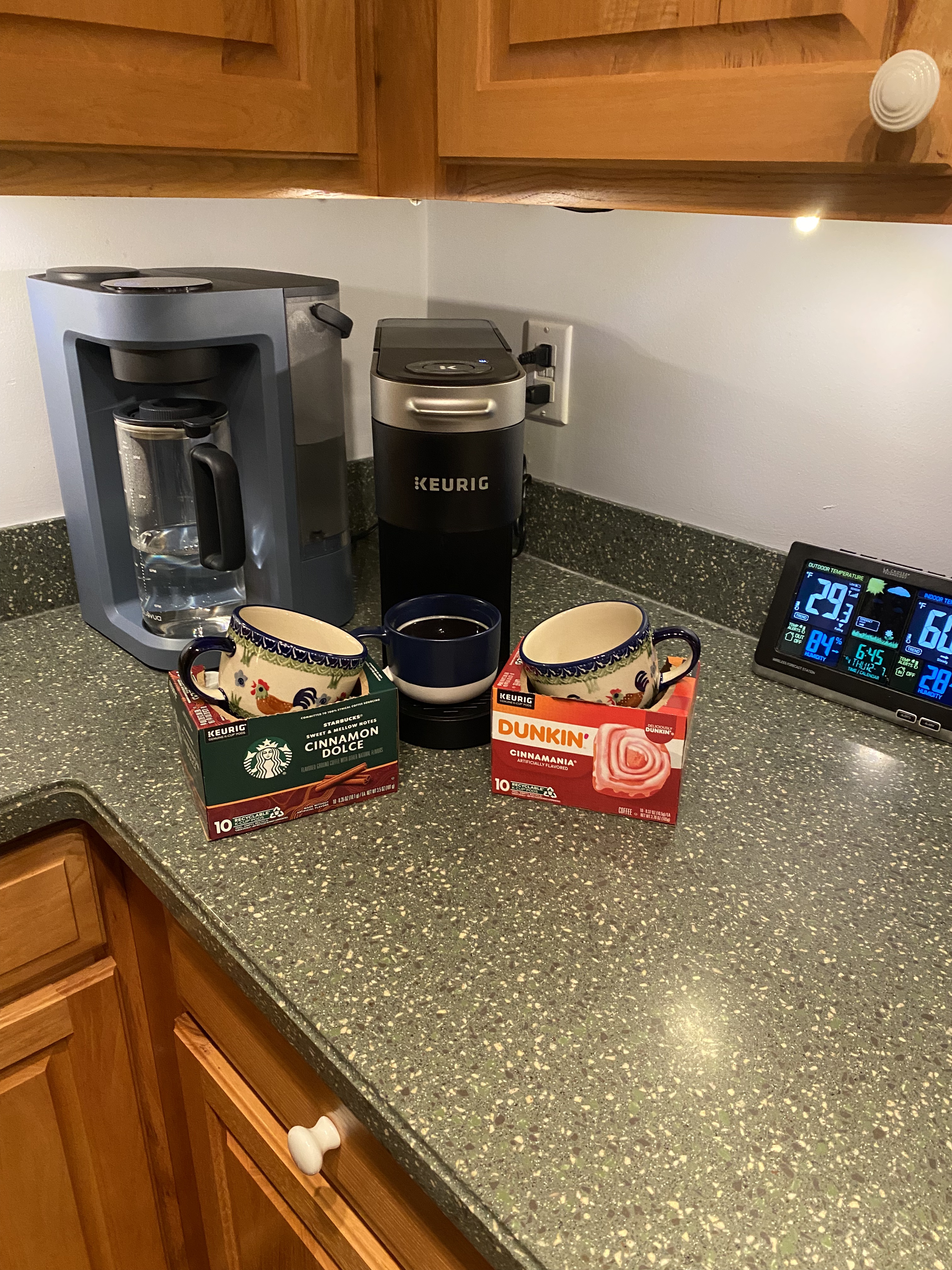
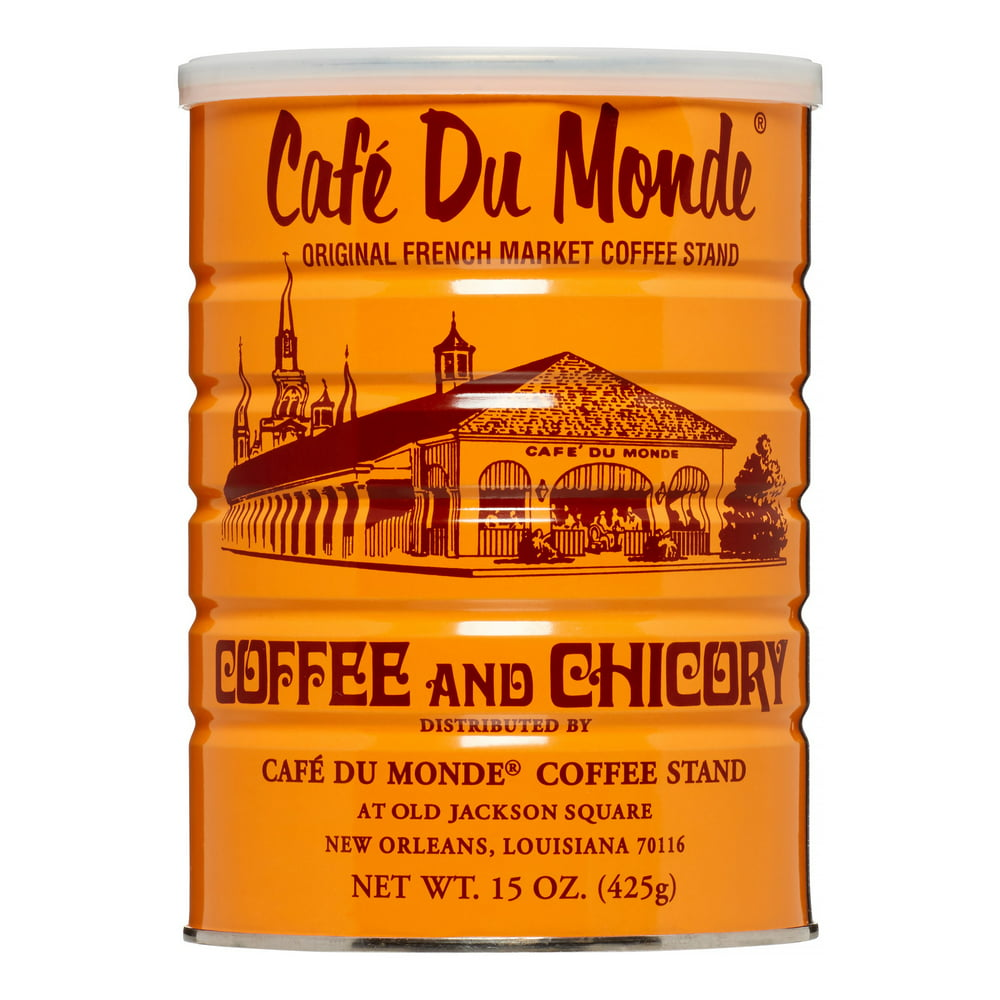
I’m wandering here. Back to the cinnamon, we both like it. I’m fond of Starbucks, they call it Cinnamon Dolce, Mary Agnes likes the Dunkin Cinnamania. I must mention I’m sweet on caramel, the little lady makes it for me and I’ve been known to add a 1/2 Tsp. to my Cinnamon Coffee. For a bit of Regularity, you might want to try a Chicory Coffee and pretend you are down New Orleans way at the Cafe Du Monde’. So COFFEE, it’s what gets us going here and around the world. And Pods, well a lot has been said about them. Whatever side of the bed you get out of in the morning, start your day, your way!
And the leaves must fall.
I’ve written previously about my Paulownia (or Princess tree.) They are a fast-growing tree that originated in the Orient. An interesting thing we’ve found over the years is that the tree loses its leaves each year with the first good frost.

Here is a great Bio on the PAULOWNIA TREE should you be interested.
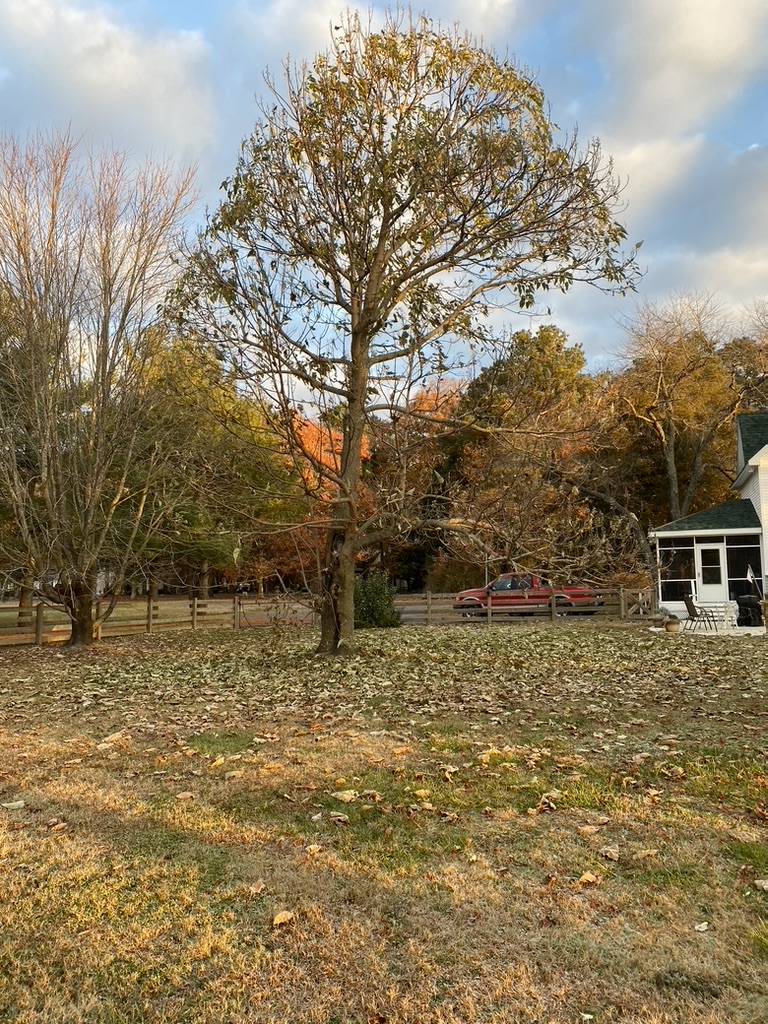
Our tree is approximately fifteen years old. During its first few years, I cut it off at the roots several times with a mower while cutting the grass. Eventually, to save the tree I put a wire fence around the base for a year or so. The backside, not visible here was lost some time ago during a harsh winter. You’re facing due north observing this image.
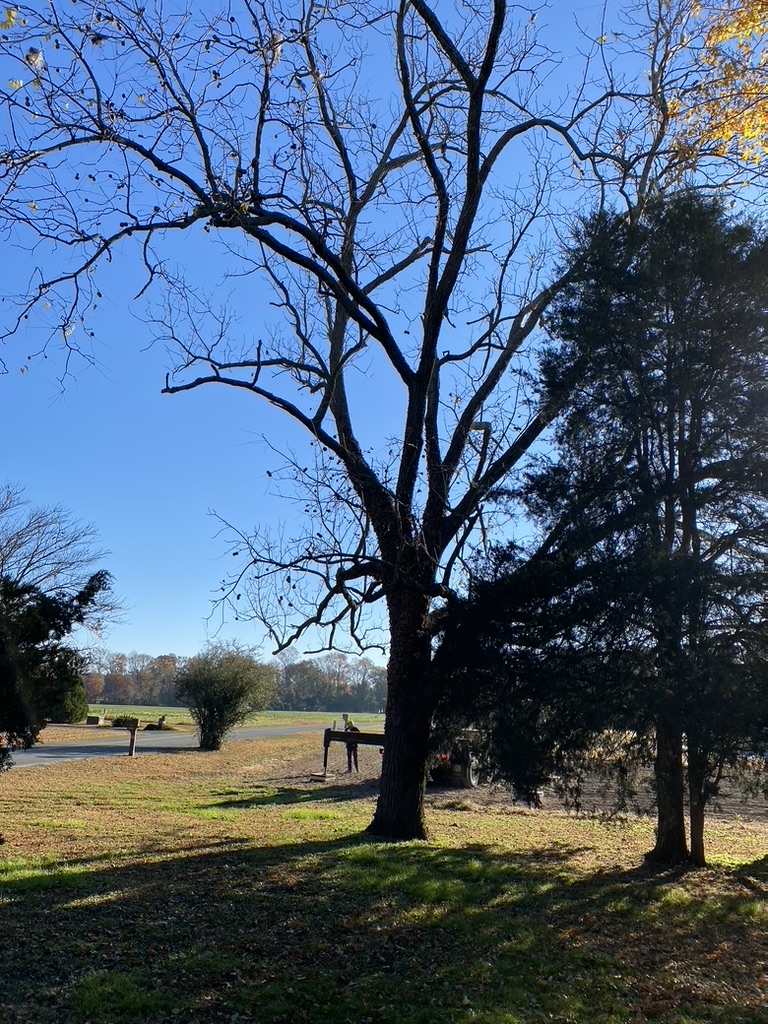
Within the past few weeks, we had to have an old Maple and a Black Walnut tree cut down.
The Black Walnut
The Maple
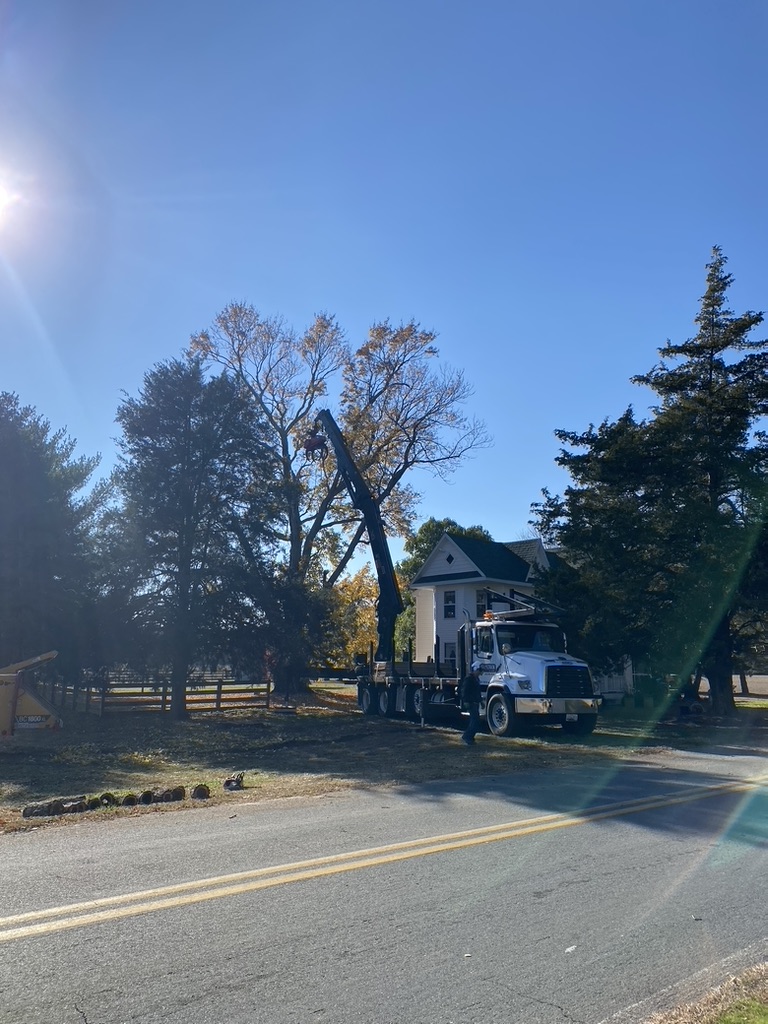
To give you some perspective on the size of these trees, the boom on the truck extends 94 feet. That portion of the Maple is hanging over our home, specifically, Mary Agnes’ sewing studio/Quilt shop. She loved that Maple, especially the red buds that came out each year. The tree constantly harbored food for a myriad of Wood Peckers, Bats, Owls, and others throughout the seasons. As she sat in her studio watching the demise of an old friend, tears welled in her eyes, as a Barn Owl flew out of a large rotted portal and lit upon a close by Yellow Pine. “His home will be gone, no more screech during the night.”
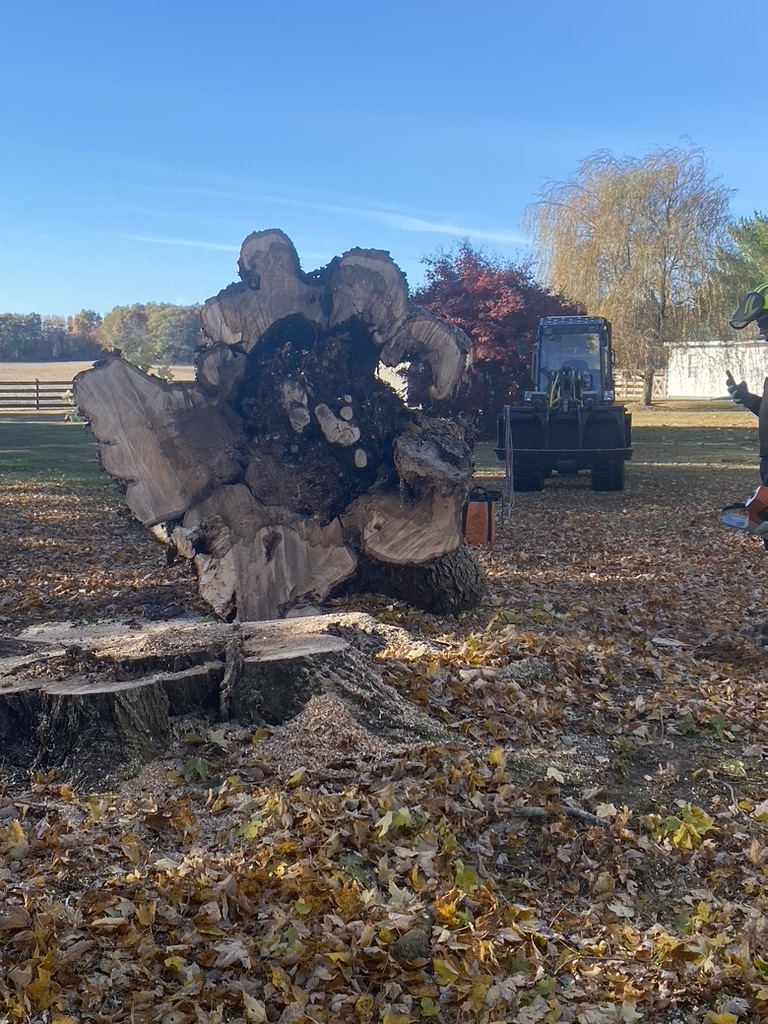
As you can see by looking at 2 o’clock on Maple’s trunk, little support was left for the part hanging over the Little Woman’s Quilt shop. I’m sure the Owl will find a new home and trees in the surrounding woods shall provide the necessary insects for the Woodpeckers.
As a side note, that is a Weeping Willow in the background. Appropriately named, as it was a gift from good friends in October of 2012 in memory of the passing of Mary Agnes’ brother Bobbie. As the winds blow, the Willow weeps.
So, for now, a tree shall not fall upon our home on a highly windy day, I feared this during several weather events this past year. Nor-easters and tropical storms frequent the Maryland coast just 30 miles away. I shall sleep peacefully, my ear will not be tuned to the gust of the blowing wi
Should you be interested in just who makes their home in a tree trunk, check out ZOO NERDY.

Chuck IT!
As I’ve mentioned previously, Jack Limpert’s Blog, “About Editing and Writing” is a blog I follow and read religiously. After reading the below I said to me self, “Yep, that be me.”
Back in Junior High, I was told by my mother and stepfather, you must take a Language. French, Latin, and Spanish were the options, I chose Spanish. I was no ball of fire academically back in those days. Actually, it lasted for a few years. It’s only for my desire to play football that I made it through high school and a diploma prior to beginning my formal education in Parris Island, SC.
While in High School I once again was told I had to take a Language and it would be Latin. You got it, didn’t pass that course. A bit of a rebel I was back then. After several tries at ninth (9) grade I was a tenth grader (10) and once again took Spanish. I think the teacher liked football players, and somehow I passed.
After the Marine Corps, I spent a few years as a professional Firefighter. I would find myself at one point, a member of the Special Services/Community Relations arm of the Dept. Sent me they did to a Spanish Speaking class. I got a certificate of completion and actually learned a lot of relevant stuff, ie: Consígueme una escalera, quite useful when one does not want to jump.
I would also, during my career as a State Trooper learn a bit of street Spanish here and there. By the time of my retirement I had been using Spanish for nie on to thirty plus years.
Today, my greatest use of the language is when I tell the young lads who mow our lawn –
“Cómprense unas cervezas después del trabajo.” I’m done with Spanish classes, lets have a cold one.

Why You Should Swap Your Bucket List For a Chuck-It List
September 4, 2023
From a Washington Post column by Valerie Tiberius headlined “Why you should swap your bucket list for a chuck-it list”:
On my father’s 75th birthday, he announced some news: He no longer intended to learn Spanish. He told me that, for most of his life, he imagined he would one day speak the language fluently, but this year, at this new age and vantage point, he was giving up that goal.
He seemed a little melancholy about it but mostly relieved that he no longer had this piñata of shame hanging over his head.
Best of all, he adopted a mental heuristic for this goal-no-longer that I believe has liberating potential for everyone: Learning Spanish, he told me, was now an item on his “chuck-it list.”
Bucket lists can be a fun, inspirational tool — they encourage us to chase new experiences, such as learning chess or going on an African safari. But let’s face it: They can also be oppressive, irritating reminders that you can’t afford that $3,000 flight to Johannesburg.
As a philosopher of well-being, I can tell you that philosophers tend to divide into three camps on the subject: hedonists, who think well-being is all about good feelings; objectivists, who believe we live well when we achieve things with value transcending the individual; and desire satisfactionists, who think well-being means fulfilling your own goals.
I am in the third camp. I like that this approach respects individual differences and explains why there are so many different good lives. But it also has a serious flaw: Focusing on pursuing our goals often leaves us running on a treadmill of desire and frustration.
The solution to this problem lies in choosing which goals to pursue. The mere pursuit of a goal won’t promote your well-being — you have to be selective. This is where the chuck-it list comes into play.
Are you the kind of person who is going to be on your deathbed regretting that you missed your chance to ride in a hot-air balloon, like Dorothy in “The Wizard of Oz”? Then do it! But when I really thought about that long-held fantasy, I let it go pretty easily, along with parasailing and completing a “century” (a 100-mile bike ride). I felt liberated when I moved these activities to my chuck-it list. It freed me to think about what I actually want to do — which is, turns out, shorter bike rides and flying only in the safety of a commercial airplane.
Of course, building the chuck-it list can be difficult. In his book “Four Thousand Weeks,” Oliver Burkeman reminds us of the old time-management trick of thinking of your goals as rocks that you have to fit into the glass jar of your life. The advice is to put in the big rocks (important goals) first because otherwise you’ll fill your jar with little, unimportant pebbles and won’t be able to fit in the big ones later.
Burkeman dislikes this advice: He points out that the metaphor presupposes that we can squeeze in all the big rocks if we start with them, which might not be true. I agree. Sometimes, it’s a big rock that we have to move to the chuck-it list.
Discarding goals that we really care about is difficult; failing to complete them can elicit sadness or regret. For my father, the relief of letting go of speaking fluent Spanish came tinged with sadness because he saw learning a foreign language as valuable. When you move things to your chuck-it list because you can’t physically do them anymore (e.g., a marathon), there’s also likely to be a layer of disappointment about aging and the reminder of mortality.
The same can be said about goals on a bucket list made impossible by financial constraints or time limitations: They force us to come to terms with circumstances beyond our control.
So what should we do about these negative feelings?
My neighbor, a retired pianist and choir director, told me she took learning certain difficult musical compositions off her bucket list. She described the resulting feeling as “sweet loss” — sweet because she can still listen to those beloved pieces, loss because she’s not going to be the one playing them.
Accepting this wisdom requires a shift in perspective. Bucket lists tie the value of our dreams to our value as individuals. Once we cut that tie, we can still appreciate the value of our abandoned goals by finding pleasure in the achievements of others.
Shifting away from a self-centered perspective can help giving up goals feel a bit less bitter. And really, what is the alternative? Keep everything on your bucket list and try to stuff all the rocks into the jar? This inevitably leads to disappointment and frustration. It might also lead to missing out on enjoying what wasn’t on your bucket list — things brought to you by serendipity that you couldn’t plan for, or things you’ve been taking for granted.
This is why I believe your chuck-it list is just as important as your bucket list. As you age, you grow into a different person with new priorities; your goals should evolve, too. Give yourself permission to remove those items you’ll probably never get to. And most important: Don’t feel bad about it.
Valerie Tiberius is a professor of philosophy at the University of Minnesota and the author of “What Do You Want Out of Life? A Philosophical Guide to Figuring Out What Matters.”

Speeding to Connecticut
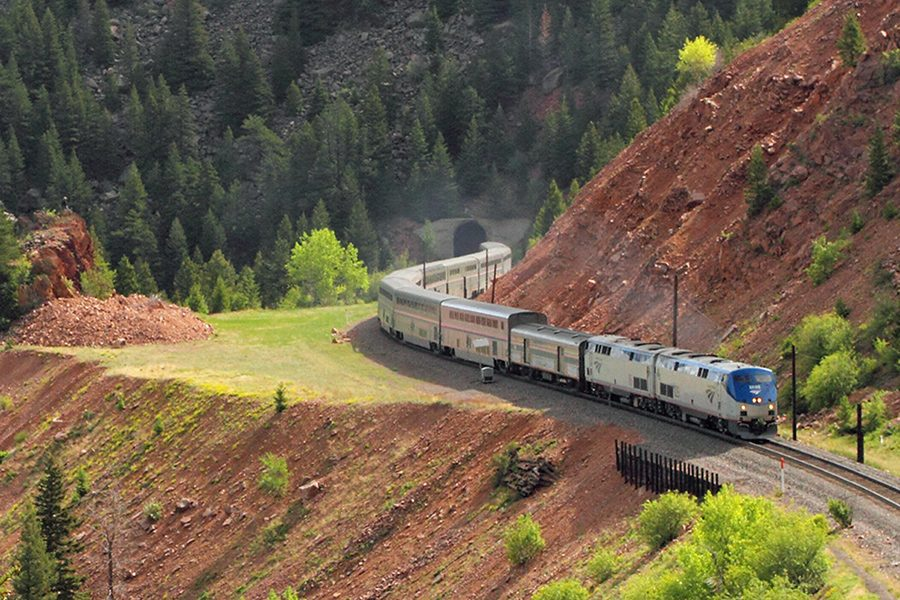
For the past thirty five years we have been driving to Connecticut from Maryland to visit with family. For twenty years we traveled from Connecticut to Maryland to visit family. Along the way we’ve had family in New Jersey, Delaware, Virginia and Florida. We’ve made these adventures via Plane and automobile. Just two weeks ago we made the journey via Amtrak.
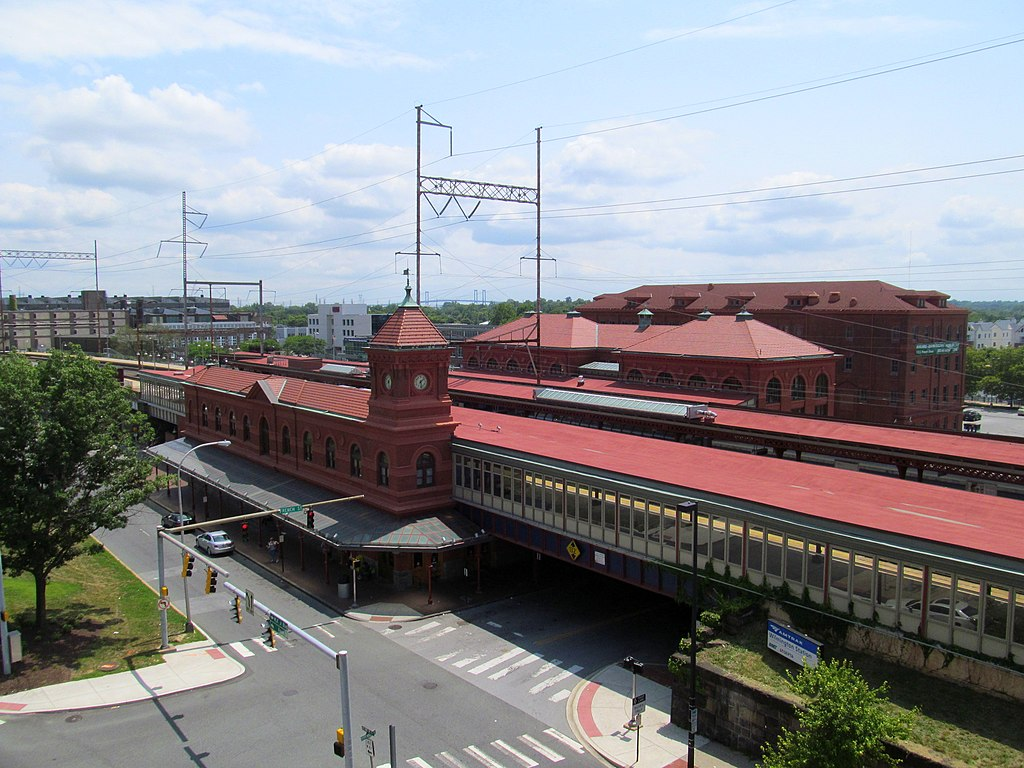
Our daughter Sarah and husband Greg provided transportation to the Wilmington, DE Train Station. Those two world travelers were inroute to Philadelphia’s airport and a trip to England & Spain. Wilmington is on the way should you not be geographically literate. So much for having to take the Bayrunner shuttle from SBY to BWI Amtrak station. Some bucks saved there.

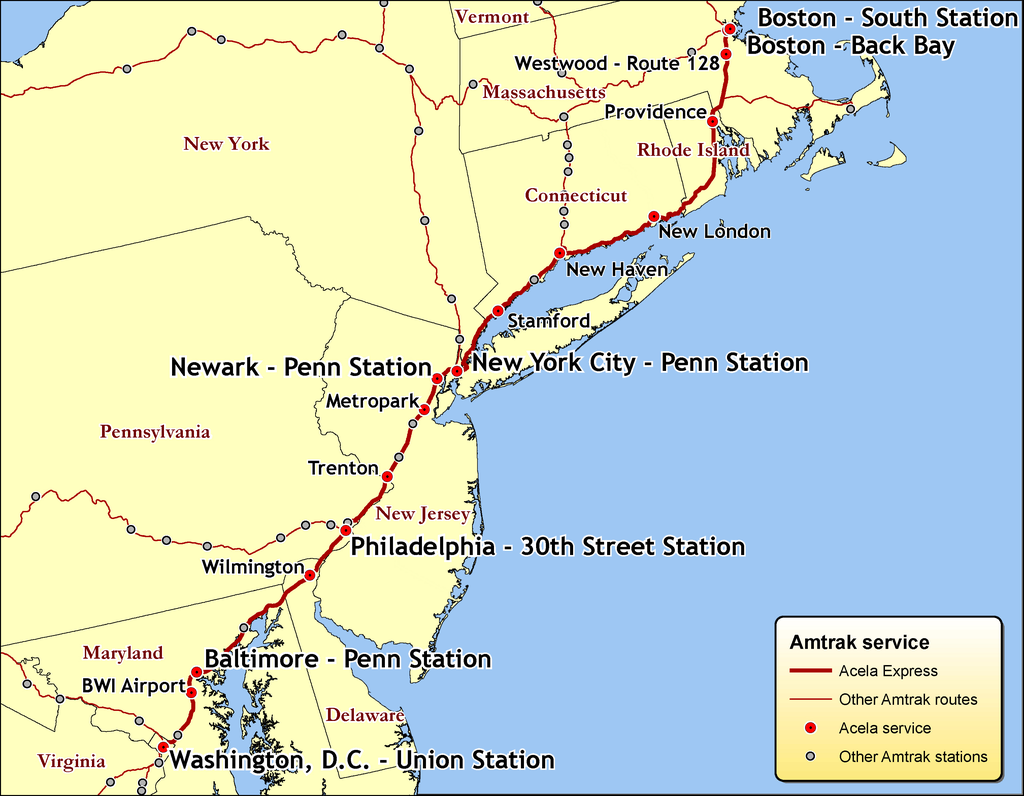
The train we would travel on was the Acela. Top speed on this sleek train is 170 MPH. Thats 273 Kilometers per hour for you folks in the rest of the world. Change to the Metric System and get rid of Day Light Saving time I say. Amtrak has a great site for tracking it’s trains. I’m a bit of a map freak and I used this site often to orient myself.
At the present time I use a cane quite often, bum knee and vertigo make a 3 point upright position easier. Elevators at Wilmington and our destination in New Haven, Connecticut helped me immensely with my navigation in the train station. My son met us in New Haven with a wheelchair in New Haven. Thanks Matt. Entry to the individual cars on the train is level with the train entrance. There is a bit of a gap, use caution should you travel this way. As in Great Britain “Mind the Gap” they say.

Once on the train we found our assigned seats in our assigned car. The station platform is marked for where each car stops. We were in a four seat cube with a table in front of each seat, (foldable). Our seat mates as far as NYC were an unrelated man and woman, business types were I guessing. A nod hello and a smile and the words “pleasant rest of the trip”, from the woman who slept most of her journey. The man, dropped a gym bag on his seat and I’m guessing spent the ride to NYC in the Cafe Car. Here’s another bloggers analyses of the Cafe Car. While pulling into Penn Station in NYC our mail seat mate returned, gathered his bag, and set off to detrain.
While enroute to NYC a server, offering drinks and snacks came around, credit card and Apple Pay only. Funny, she never mentioned peaches or orange pay. Mary Agnes had herself a glass of Sauvignon Blanc wine. I stayed with my bottled water.
With our seatmates gone two new companions arrived. One, a woman from Minnesota now living in Bourne, MA, the other, a man from Connecticut now living north of Boston. We chatted off and on and learned the woman was in Plastic Sales and the man Software sales. Our female companions mother back in Minnesota was soon to turn 101 years old and lives in her own home. These two seatmates would exit the train in Boston. Our male companion arrive damp after a 25 block jog in the rain wearing shorts and T shirt. Only negative during the entire trip, It was a cold ride. I had a hoodie, the wife a jacket, and she was still cold. She said it was 53 f with a wind chill of 45.
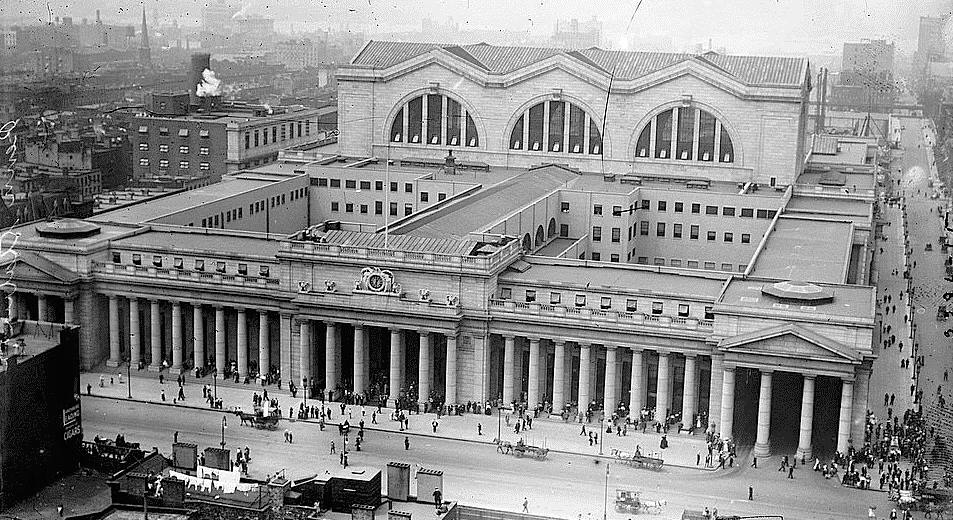
We would arrive in New Haven four minutes late. Our son met us with a wheelchair, and several elevator rides to the parking garage we were on our way north to the kids home an hour away.
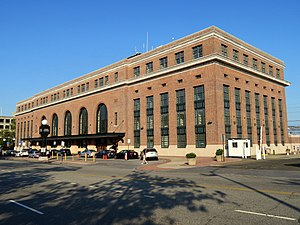
The reason for the trip, Granddaughter Rebecca’s HS graduation. Congrats Kiddo, Bryant College in RI, next stop.
As far as safety is concerned we never felt apprehensive at all during the trip. Uniformed law enforcement was visible in all stops as well as officers with dogs at Wilmington and New Haven. The trains were clean and seats comfortable with easy baggage storage. We will definitely ride the rails again soon.
Our return trip four days later would go from New Haven’s Union Station to Baltimore’s BWI Station. I’ll make that trip my next blog. Have a great day my friends.
Please, don’t forget to check on the elderly. Semper Fi
Woof Woof
I’m going to share something from “The Paris Review,” it’s one of my yearly expenses and I’m reading of the works of many people past and present. What is the “Paris Review” you ask.
- The Paris Review, American literary quarterly founded in 1953 by Peter Matthiessen, Harold L. Humes, and George Plimpton, with Plimpton also serving as the first editor. It is an English-language review modeled on the independent literary magazines (also known as “ little magazines ”) published in Paris in the 1920s.
After reading this poem in the most recent review, I could not but look at my own pets down through the years, especially dogs.
My dogs started with a Mutt named Lady, I can not remember when she crossed the Rainbow Bridge. However I do know the loss of a pet can be an emotionally devastating experience. I do know Lady was my pal early in life back in the 40’s. Somewhere around the age of 9 or 10 we adopted Scarlet & Amber, Dalmations from the same litter. They were inseparable and lasted at most, and I’m guessing, a month? They had to be returned as they were not good house pets I was told.
Next was Co Co, full name CoCO Mimi Celest by Hecht. I turned that girl into a hunting a dog, ten yards out, back and forth, Quail, Grouse, Pheasant or whatever, kick it to the air she would. She loved the hedgerows of Burlington County, NJ back in the late 50’s and early 60’s. Most of those hedge rows and birds no longer exist. The only downfall of this girl was, she hated getting her feet wet. Whenever we came to a stream, I’d cross, lay the Shotgun down and return for CoCo’s ride across the water.
In 1969 or 70 I brought home from work a medium sized scruffy wire haired dog named Ping. The name, she used to lay beneath the Ping Pong table at the firehouse I worked at. An old LaFrance (1947) 100 ft aerial ladder truck co. in Hartford, CT is what I rode. Back in the day I like to say.
The Mrs. wasn’t too keen on this pathetic looking creature and I remember her saying, “If he so much as nips once, any of the children, out he goes. The kids, a new born, one, 1 yo and another age 3. Never a nip, had that wonderful pet for a good ten years. Called her Ping the Wonder Dog back in the day.

A Yellow Lab with the name of Saucy would also join us those years in Connecticut. Once the fruit of the vine appeared, we continuously found Cucumbers on our lawn from neighbors gardens, the Lords bounty.
After my retirement from the CT State Police we moved to the Eastern Shore of Maryland, a sort of compromise between Maine, the Mrs. choice, and Florida, my choice. We wound up getting a Black Lab – Mix, and what we suspect was the father, a Collie named Chief. That Mutts name was Troop.
We would have a Marsh and a Duke along the way. Next to last we had a Maggi, a Standard Poodle and presently, another Standard Poodle, Benjamin.
Many of the atributes mentioned in the poem I am about to share existed in one or all of our past canines.
Without further ado, I share with you.
| Erica Jong Jubilate Canis (With apologies to Christopher Smart) For I will consider my dog Poochkin (& his long-lost brothers, Chekarf & Dogstoyevsky). For he is the reincarnation of a great canine poet. For he barks in meter, & when I leave him alone his yelps at the door are epic. For he is white, furry, & resembles a bathmat. For he sleeps at my feet as I write & therefore is my greatest critic. For he follows me into the bathroom & faithfully pees on paper. For he is almost housebroken. For he eats the dog food I give him but also loves Jarlsberg swiss cheese. For he disdains nothing that smells— whether feet or roses. For to him, all smells are created equal by God— both turds and perfumes. For he loves toilet bowls no less than soup bowls. For by watching, I have understood democracy. For by watching him, I have understood democracy. For he turns his belly toward God & raises his paws & penis in supplication. For he hangs his pink tongue out of his mouth like a festival banner for God. For though he is male, he has pink nipples on his belly like the female. For though he is canine, he is more humane than most humans. For when he dreams he mutters in his sleep like any poet. For when he wakes he yawns & stretches & stands on his hind legs to greet me. For, after he shits, he romps and frolics with supreme abandon. For after he eats, he is more contented than any human. For in every room he will find the coolest corner, & having found it, he has the sense to stay there. From issue no. 71 (Fall 1977) |
| Don’t forget to check on the elderly. theRooster |
Hamburger Helper

This morning the wife and I are sitting at the kitchen table and I notice a box of Hamburger Helper on the counter. It’s been many a year since I’ve seen a box like that in our house. ” What pray God are we doing with that,” says I. The little lady answers with, “I just thought a trip back to the fifties might be something different”
I am shocked. We eat quite well mostly, no strict diet of one kind or another. Our diet is what I would call well rounded. None of that scheduled fasting, no Vegan, Ketogenic, Mediterranean, Paleo, Weight Watcher’s, Carb Cycling or what ever. I’d like to call our diet a good old sensible 1950’s real food diet. I mean, for goodness sakes, I’ll be eighty (80) in a few months, we must be doing something right.
So, getting back to the Helper. No Hamburger in the freezer, so the lady breaks out a pound of ground Pork. “How about some Green Beans with that.” “No,” Hamburger Helper I’m told. You see, I love Green Beans. I could most likely finish a #10 can of the beans all by myself. I’m told there may be some Spinach mixed in. Wouldn’t Popeye be proud of us. So, tonight, it’s back to the fifties.
Our daughter Kathryn and son-in-law Jeff have Jeff’s dad living with them for a few months. Jeff’s heading to Austria and Slovenia for a few weeks soon and we shall prepare some of the meals. I’m guessing Jeff will eat quite well on someone else’s dime. Daughter Kathryn gets busy at work so we shall help with a meal or two on the table for her and her father-in-law.
Some great meals from the fifties, Beef Stroganoff, thanks Hamburger Helper. Next on most everyone’s list, Meat Loaf. The beefy, robust flavors come together like nothing else and have become cherished by every American across the country. How about Skirt Steak on the grill? After World War II, American families could finally get more access to meat and with the advent of outdoor grilling, steaks became the hot item that continues to define American cuisine.

Chicken and dumplings trace their roots back for centuries. Our dumplings are called Slicks. Auntie Ems has them all ready to boil and frozen should you wish to shop in our Food Lion or Acme. A bit of Green Bean Casserole on the side would be lovely. My good Irish friend Ed O’Leary uses the word LOVELY quite often. Hands across the sea you know. I have a cousin, haven’t seen her in years, Patty was her name. For family functions we could always depend on Green Beans and Onion topping. If you’re reading this, “Hi Patty.”

Chili, we eat this with a bit of frequency, thanks to son-in-law Jeff. It’s especially good during football season. On the side you’ll always find a bowl of Jalapenos. His gut must always be in turmoil.
I could go on and on, how about Chicken Pot Pie, a Sunday Beef or Pork Roast with mashed potatoes and roasted carrots, and weekend meals are sure to transform forever. Don’t forget to go to Sunday School.
We in our suburban Philadelphia home always had, it seemed like a weekly staple anyhow, Fish Sticks. To this day, I deplore Fish Steaks.
At any rate, should you be old enough to remember, perhaps I’ve stimulated your brain and taste buds. Eat well, eat often, and don’t go to be hungry.
Turn off the TV and internet fifteen minutes early, pick up your favorite book, and read a few pages. It really helps you sleep. Currently, I’m Reading “Fall of Giants” by Ken Follett. It seems lately it’s either history or the life and times of Stone Barrington that I’m reading. Stuart Woods writes about Mr. Barrington.
25f on 12/06 on Md’s Eastern Shore this AM. It was a bit chilly when I let the chickens out of the hutch. Now, if we could just have a few more eggs girls. They’ve reached the terrible twos, The egg count is down.

Don’t forget to check on the elderly.
November 10, 2022

A Birthday
Yes today is my birthday, along with every other present and past United States Marine. No matter where we born, Parris Island, SC, San Diego CA or Quantico, VA. When you get that Eagle Globe and Anchor, your life as a Marine has begun. I feel I’m looking pretty good for a man of 247 years.

Here is the Commandant’s message for this the 247 Birthday of the Marine Corps. Should you be interested in learning a little more, take a few minutes and watch the accompanying video.

The US Marine Corps started as the Continental Marines on November 10, 1775. On that date, the Second Continental Congress decided that they needed 2 battalions of Marines to serve as landing forces with the Continental Navy during the American Revolutionary War (1775–1783).
(Photo from : https://weaponsandwarfare.com/about/
After the war, the Continental Navy was dismantled, and as a consequence the Marines as well. However, after increasing conflict with revolutionary France, the Marine Corps was formally re-established.
Trainning
If you live east of the Mississippi river, your boot camp training will be located at Parris Island, SC. Now there is a special place that brings back many memories from every Marine who has gone through that training.
Parris Island has a long history of colonization. Many attempts were made at permanent settlement between 1526 and 1722. The first successful attempt was made by the French in 1562, followed by the Spanish and finally the British. After the Revolutionary War, Parris Island plantations began to grow cotton instead of indigo. During the Civil War, the island became a coaling station for the Union Navy.
Nov. 2, 1861 – The first Marines in the area of Parris Island sailed into Port Royal Harbor, S.C., as members of detachments aboard various ships with the Atlantic Blockading Squadron. Commanding officer, Navy Capt. Samuel F. Du Pont, seized the area and it was used as an important base for the Union Navy throughout the Civil War.
Aug. 7, 1882 – An act of Congress authorized the establishment and construction of a coaling dock and naval storehouse at Port Royal Harbor. A select group of naval officers chose Parris Island as the site.
Yamassee
In early July of 1962 this writer arrived at Parris Island via Yamassee, SC.
Although Parris Island’s first recruits arrived on the USS Prairie in October 1915, the Marines developed that same year a train station at Yemassee, S.C., which was the depot’s initial receiving point for the central and eastern recruiting stations. The town then had a bank, a general store, a few houses and “an abundancy of South Carolina pine.” A hotel was also there in 1915, and the Marines praised its ballroom and the gracious hospitality of the townspeople, especially its pretty girls. Recruits arriving at Yemassee on the Atlantic Coast Line Railroad would be transferred to the Charleston & Western Railroad, which ran to Port Royal. Once there, the World War I recruits would be placed on everything from side wheel ferryboats, barges, long boats or a kicker (a small motor boat) for the trip to Parris Island. Today, most all recruits are flown to this great advenure and will land in Charleston, SC.
I along with a host of new recruits from more northern states would board a train at 30th street station in Philadelphia, PA and head south to 13 weeks of summer camp. Should wish to learn more of this summer adventure check out https://www.mcrdpi.marines.mil/Centennial-Celebration/Historical-information/8-Yemassee-SC/
Marine Corps Recruit Depot San Diego
Today this Recruit Depot provides its nation’s Corps with basically trained Marines to fight in the current conflicts in both Iraq and Afghanistan. The depot has the responsibility to train all male recruits who reside west of the Mississippi River to serve at the call of the nation. Some history should you be interested. https://www.mcrdsd.marines.mil/About/Depot-History/

Officer Candidates School
The mission of Officer Candidates School (OCS) is to educate and train officer candidates in Marine Corps knowledge and skills within a controlled and challenging environment in order to evaluate and screen individuals for the leadership, moral, mental, and physical qualities required for commissioning as a Marine Corps officer.
I Can See Clearly Now
So, January 30 was my last post here on WordPress. I surely am not getting my $$$$ worth. Had some vision issues for a bit, which have been corrected with surgery two weeks ago. Well, mostly corrected, I still have a way to go, but much improved. Enough said on that subject.
To most of you whom I follow, I have tried to acknowledge your posts, for the most part anyway. If I’ve missed you, please forgive me.

This world of ours has flipped a bit upside down of late. Let us not blame the Russian people, there is enough hate out there already.
This past weekend I got to marry my nephew to his new bride.

Come June I’ll get to perform another wedding. This time it will be in Rhode Island and my brother Richard will marry the love of his life, Tina. Joseph and Ashton were married in Lewes, DE. I’ve also done ceremonies in Maryland and Connecticut. Things like this keep an old man out of trouble. So far all have been relatives, I can’t even make a buck on these events, You just can’t charge family.

For those who remember Aunt Barb, well she treated the wedding party to a grand meal of one’s choice at Baywood Golf Course. The Mrs. and I have eaten there on numerous occasions and have never been disappointed. Thanks, Aunt Barb! If you’re ever near the Delaware Beaches, it’s a great dining experience.
I leave you for this day, and feel good a blog is out. To all of you who know of the Rooster, Hello Again!

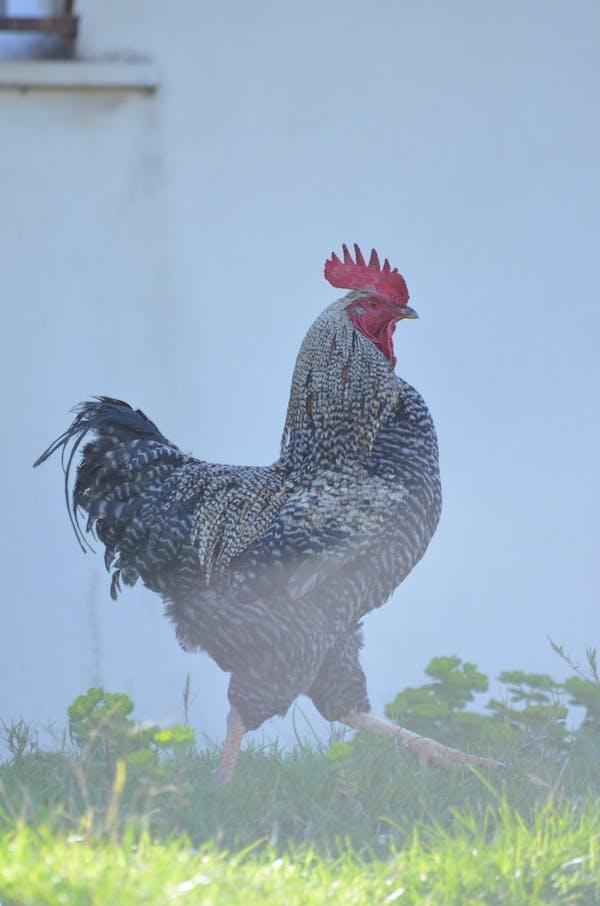
 As The Rooster Crows
#/media/File:Penn_2163723600_1bb4d3f9c6_o_crop.jpg)