
Home » Posts tagged 'Daylight Savings Time'
Tag Archives: Daylight Savings Time
Speeding to Connecticut
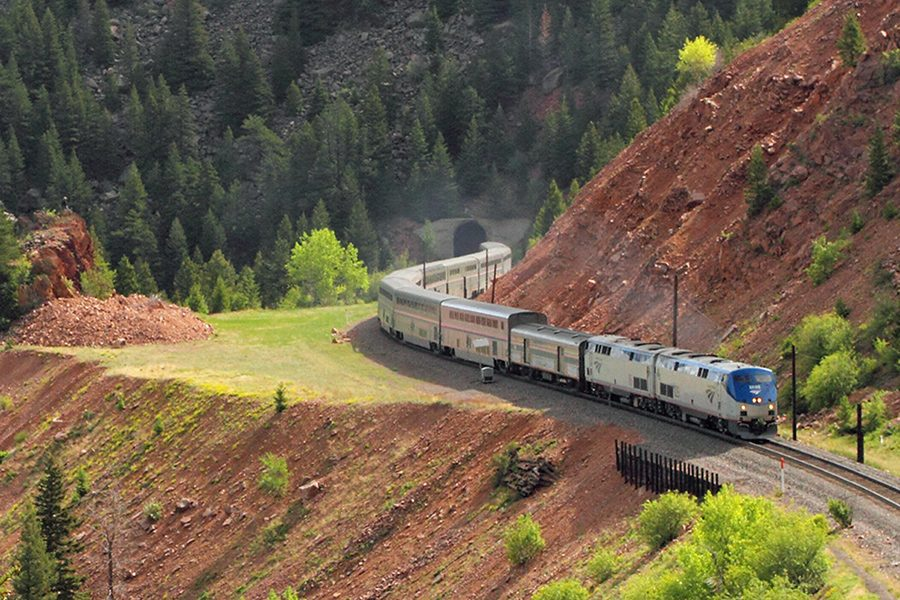
For the past thirty five years we have been driving to Connecticut from Maryland to visit with family. For twenty years we traveled from Connecticut to Maryland to visit family. Along the way we’ve had family in New Jersey, Delaware, Virginia and Florida. We’ve made these adventures via Plane and automobile. Just two weeks ago we made the journey via Amtrak.
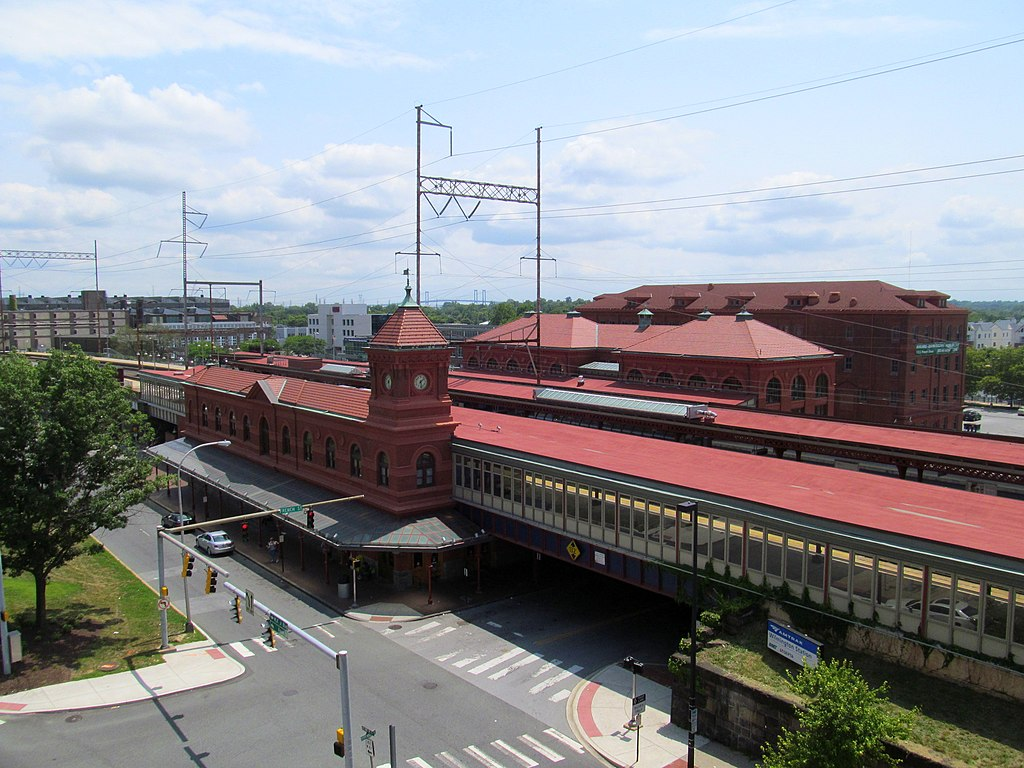
Our daughter Sarah and husband Greg provided transportation to the Wilmington, DE Train Station. Those two world travelers were inroute to Philadelphia’s airport and a trip to England & Spain. Wilmington is on the way should you not be geographically literate. So much for having to take the Bayrunner shuttle from SBY to BWI Amtrak station. Some bucks saved there.
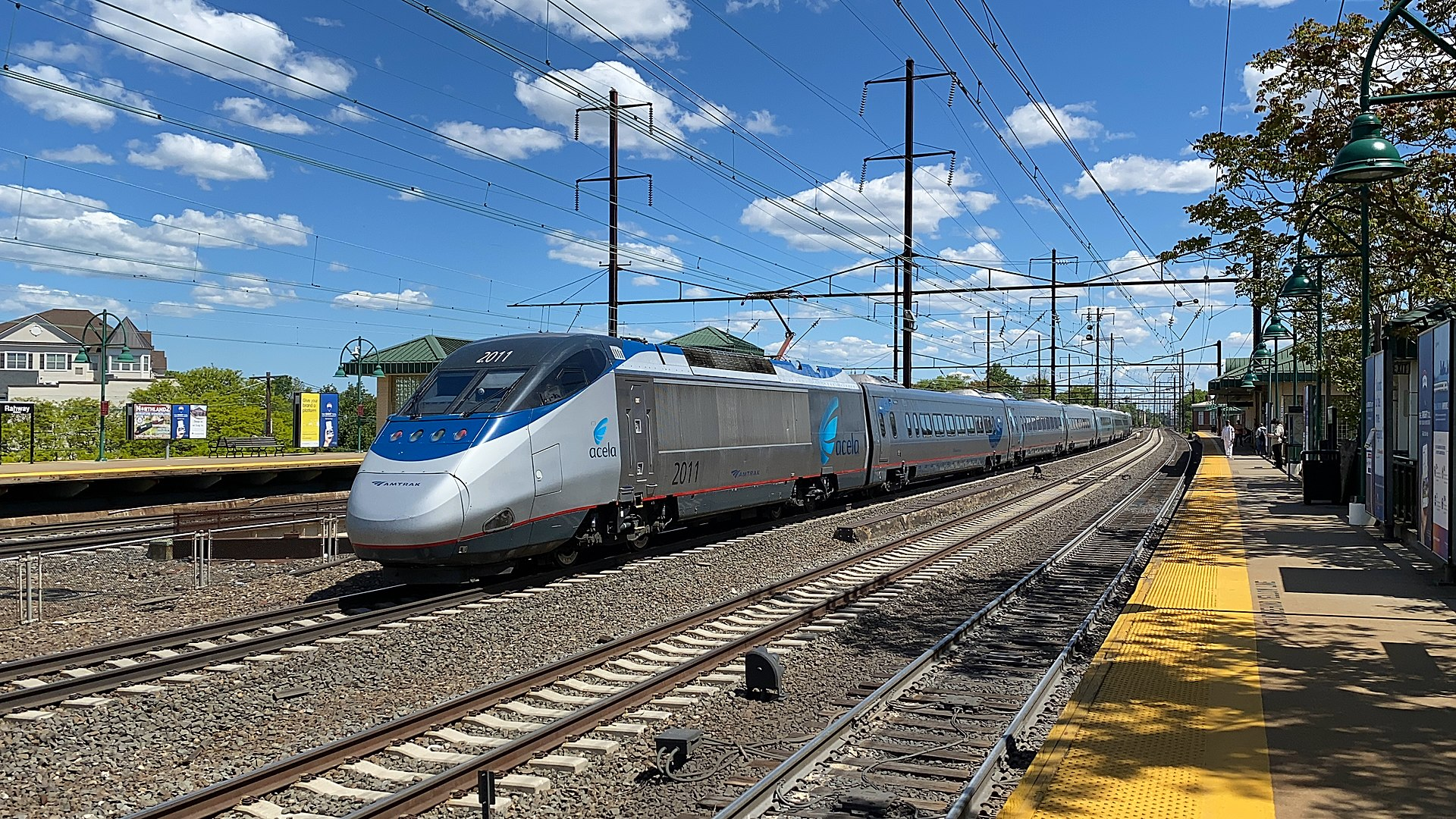
The train we would travel on was the Acela. Top speed on this sleek train is 170 MPH. Thats 273 Kilometers per hour for you folks in the rest of the world. Change to the Metric System and get rid of Day Light Saving time I say. Amtrak has a great site for tracking it’s trains. I’m a bit of a map freak and I used this site often to orient myself.
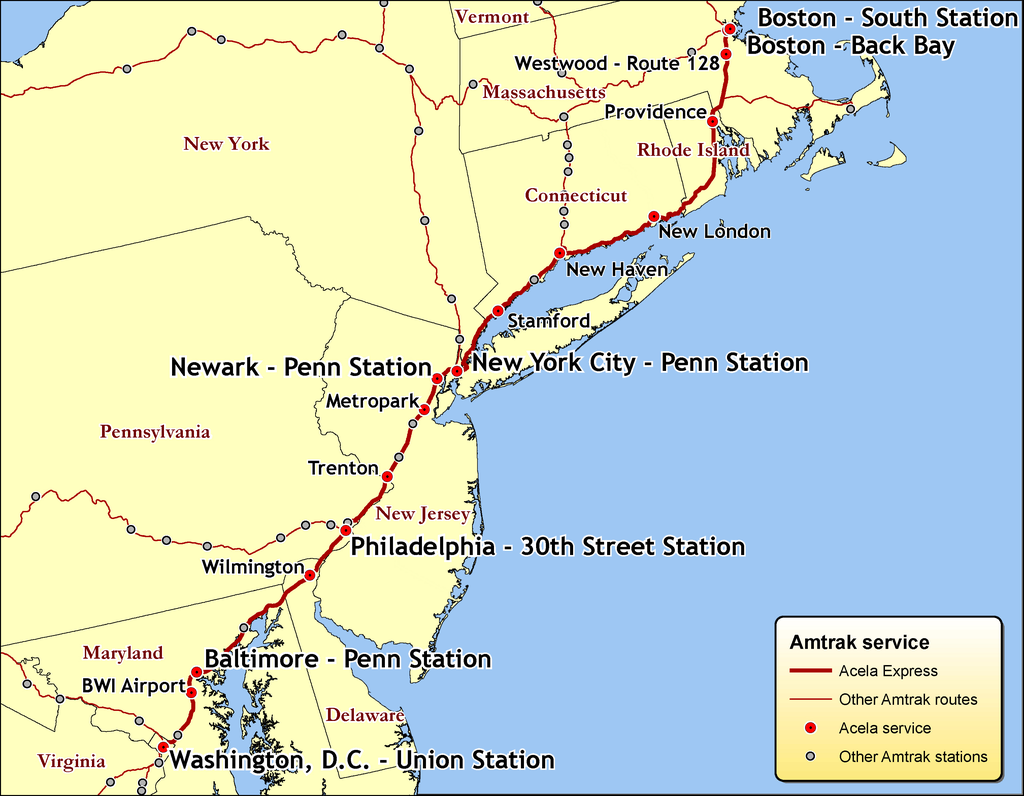
At the present time I use a cane quite often, bum knee and vertigo make a 3 point upright position easier. Elevators at Wilmington and our destination in New Haven, Connecticut helped me immensely with my navigation in the train station. My son met us in New Haven with a wheelchair in New Haven. Thanks Matt. Entry to the individual cars on the train is level with the train entrance. There is a bit of a gap, use caution should you travel this way. As in Great Britain “Mind the Gap” they say.

Once on the train we found our assigned seats in our assigned car. The station platform is marked for where each car stops. We were in a four seat cube with a table in front of each seat, (foldable). Our seat mates as far as NYC were an unrelated man and woman, business types were I guessing. A nod hello and a smile and the words “pleasant rest of the trip”, from the woman who slept most of her journey. The man, dropped a gym bag on his seat and I’m guessing spent the ride to NYC in the Cafe Car. Here’s another bloggers analyses of the Cafe Car. While pulling into Penn Station in NYC our mail seat mate returned, gathered his bag, and set off to detrain.
While enroute to NYC a server, offering drinks and snacks came around, credit card and Apple Pay only. Funny, she never mentioned peaches or orange pay. Mary Agnes had herself a glass of Sauvignon Blanc wine. I stayed with my bottled water.
With our seatmates gone two new companions arrived. One, a woman from Minnesota now living in Bourne, MA, the other, a man from Connecticut now living north of Boston. We chatted off and on and learned the woman was in Plastic Sales and the man Software sales. Our female companions mother back in Minnesota was soon to turn 101 years old and lives in her own home. These two seatmates would exit the train in Boston. Our male companion arrive damp after a 25 block jog in the rain wearing shorts and T shirt. Only negative during the entire trip, It was a cold ride. I had a hoodie, the wife a jacket, and she was still cold. She said it was 53 f with a wind chill of 45.

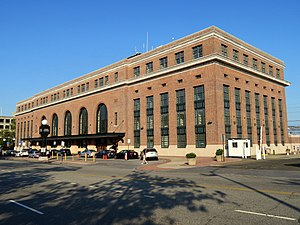
We would arrive in New Haven four minutes late. Our son met us with a wheelchair, and several elevator rides to the parking garage we were on our way north to the kids home an hour away.
The reason for the trip, Granddaughter Rebecca’s HS graduation. Congrats Kiddo, Bryant College in RI, next stop.
As far as safety is concerned we never felt apprehensive at all during the trip. Uniformed law enforcement was visible in all stops as well as officers with dogs at Wilmington and New Haven. The trains were clean and seats comfortable with easy baggage storage. We will definitely ride the rails again soon.
Our return trip four days later would go from New Haven’s Union Station to Baltimore’s BWI Station. I’ll make that trip my next blog. Have a great day my friends.
Please, don’t forget to check on the elderly. Semper Fi

Who agrees with Daylight Savings Time?
“Why are we still doing this,”my wife asks. “You want more daylight, get up earlier.”

Here’s what “The Atlantic” says:
What Is Daylight Saving Time? The History Behind Why We Set Our Clocks Forward and Back
Mic By Kathleen Wong
March 8, 2016 7:27 AM
On March 13 at 2 a.m., almost everyone who lives in the United States (unless you live in Hawaii or Arizona) and 78 other countries will need to turn their clocks forward by one hour for daylight saving time, according to NJ.com. As always, daylight saving time starts on the second Sunday of March and runs for about eight months until the first Sunday of November, when clocks are turned back an hour.
Daylight saving time started in 1918 during World War I as a way to allegedly conserve fuel, according to NJ.com. The public didn’t like the idea, and daylight saving time fell to the state’s discretion until the Uniform Time Act of 1966, according to Live Science. But the idea of “maximizing daylight” can actually be traced back to the late 1700s to Benjamin Franklin, according to the Atlantic.
Read more: Daylight Saving Time Isn’t Just Annoying — It Could Be Bad for Our Health, Says Science
In 2007, daylight saving time was lengthened by a month due to the Energy Policy Act of 2005, according to NJ.com.
View photo
.
What Is Daylight Saving Time? The History Behind Why We Set Our Clocks Forward and Back
Source: Sonja Langford/Unsplash
Unfortunately, the energy savings that come with daylight saving time aren’t very significant, according to the Atlantic. In 2008, the National Bureau of Economic Research found that while the use of lighting dropped, the use of air-conditioning increased in turn.
So not only is there a lost hour of sleep, but the hour of extra sunlight doesn’t really provide many health benefits, according to the Washington Post. Experts have found more suicides, headaches and workplace accidents around the start and finish of daylight saving time. A large component of that mood disrupting has to do with the change in the circadian rhythm, or the body’s 24 hour cycle (which also deals with sleep).
 As The Rooster Crows
#/media/File:Penn_2163723600_1bb4d3f9c6_o_crop.jpg)